
Society Audit & Taxation in Mumbai
A missed audit deadline. An ITR filed incorrectly. GST calculated the wrong way on maintenance. None of these look serious on the day they happen. Three months later, one of them is a Registrar notice, a tax department query, or a managing committee being held personally liable for something nobody flagged in time.
This is usually where the gap opens up. The accountant handles the books. The auditor signs off once a year. The committee is expected to somehow know when the two don't line up. Tickboxes handles statutory audit, income tax filing, and GST compliance as one connected service, so audit findings, tax filings, and GST returns are tracked against each other, not filed separately by three different people who never compare notes.
We currently manage audit and taxation for 100+ housing societies and 10,000+ members across Mumbai, working alongside the Statutory and Compliance Management service so a society's registers, filings, and financial obligations move on the same calendar, not three different ones.
Book a Free Audit & Tax Review →
What We Handle
Audit and tax compliance usually breaks down at the handoff points — the auditor doesn't have the fund records in time, the ITR gets filed without reconciling against the audit, GST gets applied inconsistently because nobody's tracking the ₹7,500 threshold month to month. None of these are complicated problems on their own. They become expensive because nobody owns the full picture.
Here's what Tickboxes takes ownership of:
Auditor appointment, document handoff, and rotation planning, tracked against Section 81 of the MCS Act so the same auditor never quietly serves past the 5-year limit.
Sinking fund and repair fund records kept audit-ready through the year, not reconstructed the week before the auditor arrives.
Return preparation, Section 80P deduction claims, and reconciliation against the audit report, so the deduction doesn't get missed over a filing delay.
Registration review, correct rate application, GSTR-1 and GSTR-3B, tracked against actual maintenance levels, not a one-time check done years ago.
Deduction, deposit, and quarterly returns on contractor payments.
Audit, tax, and GST tracked together with compliance filings, so a delay in one doesn't quietly cause a delay in another.
Why Societies Choose Tickboxes
Audit and tax aren't a once-a-year scramble for us, it's continuous. 100+ societies and 10,000+ members across Mumbai trust us, backed by a team in Andheri West that works directly with local Registrar and tax offices.
What Tickboxes Actually Is
Not an accountant. Not an auditor. Not a facility manager. Tickboxes is the layer that connects all of them, so a compliance deadline, a GST filing, and an audit finding are never sitting in three disconnected places, waiting for someone on a volunteer committee to notice the gap between them.
That's the difference between a society that's audited and a society that's actually managed. An audit tells a committee what happened last year. Tickboxes makes sure this year's filings, fund records, and tax deadlines stay in sync well before the next audit ever needs to ask a hard question.
A premium home holds its value because of what happens after possession, not before it. Audit and tax compliance is one of the clearest signals of that: a society where nothing gets missed, nothing gets filed late, and no one on the committee is left personally exposed because a deadline slipped through.
Quick Clarity: The Two GST Thresholds Everyone Confuses
Two separate thresholds, and mixing them up is one of the most common GST errors societies make:
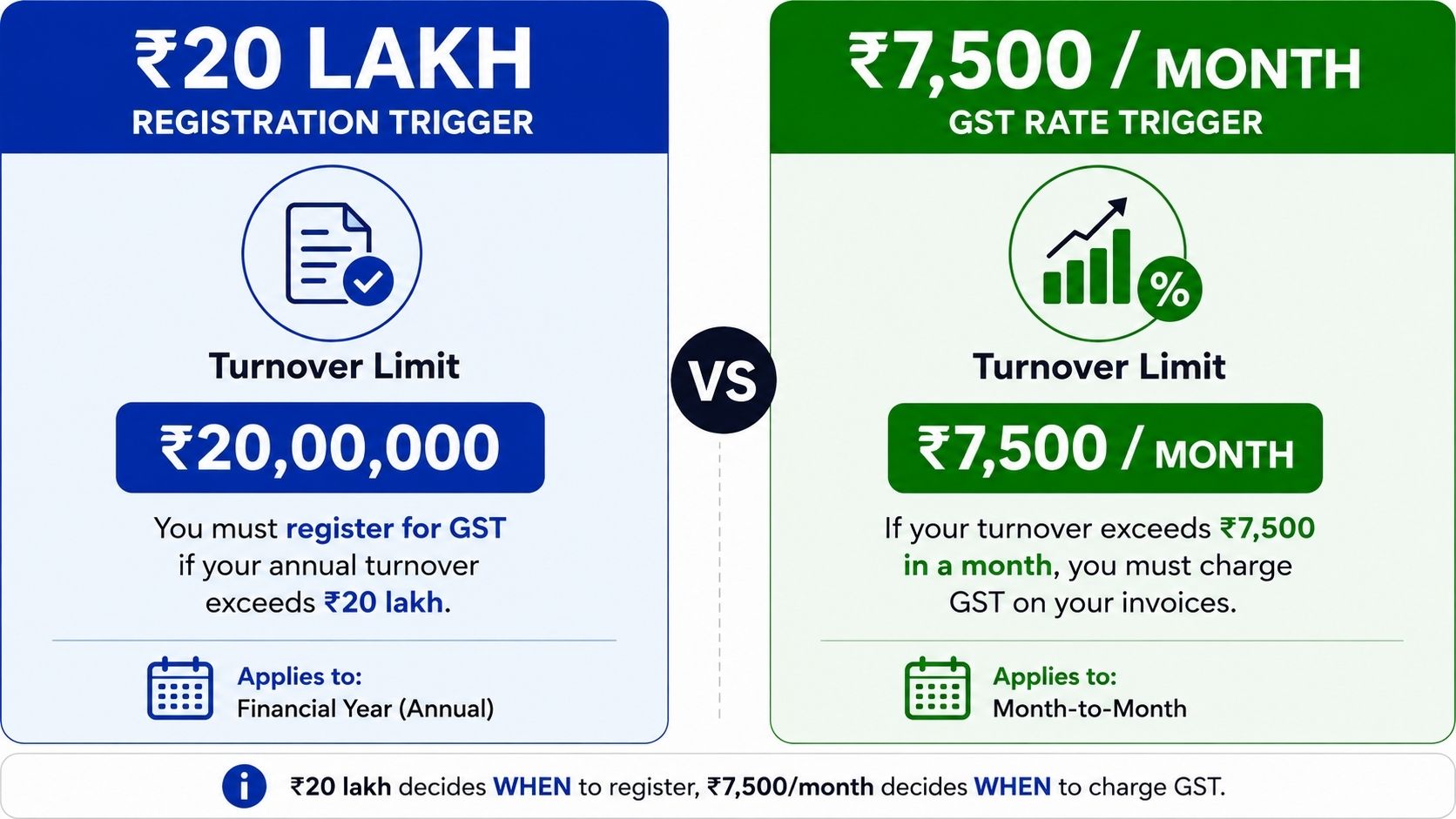
If maintenance is ₹10,000/month, GST applies to the full ₹10,000 — not just the amount above ₹7,500. Non-member income (rent, hoardings, guest parking) is taxable regardless of either threshold.
The Registers You're Legally Required to File
Statutory Audit, In Brief
- Mandatory annually under MCS Act Section 81
- Auditor must be a practicing CA or from the Cooperative Department panel
- Same auditor can't serve more than 5 consecutive years
- Covers receipts/payments, fund compliance, arrears, TDS, and by-law adherence
Income Tax Filing, In Brief
- Societies file as an AOP using Form ITR-5
- Member surplus is exempt under mutuality, but interest and non-member income is taxable
- Section 80P deduction on cooperative bank interest — valid only if filed on time
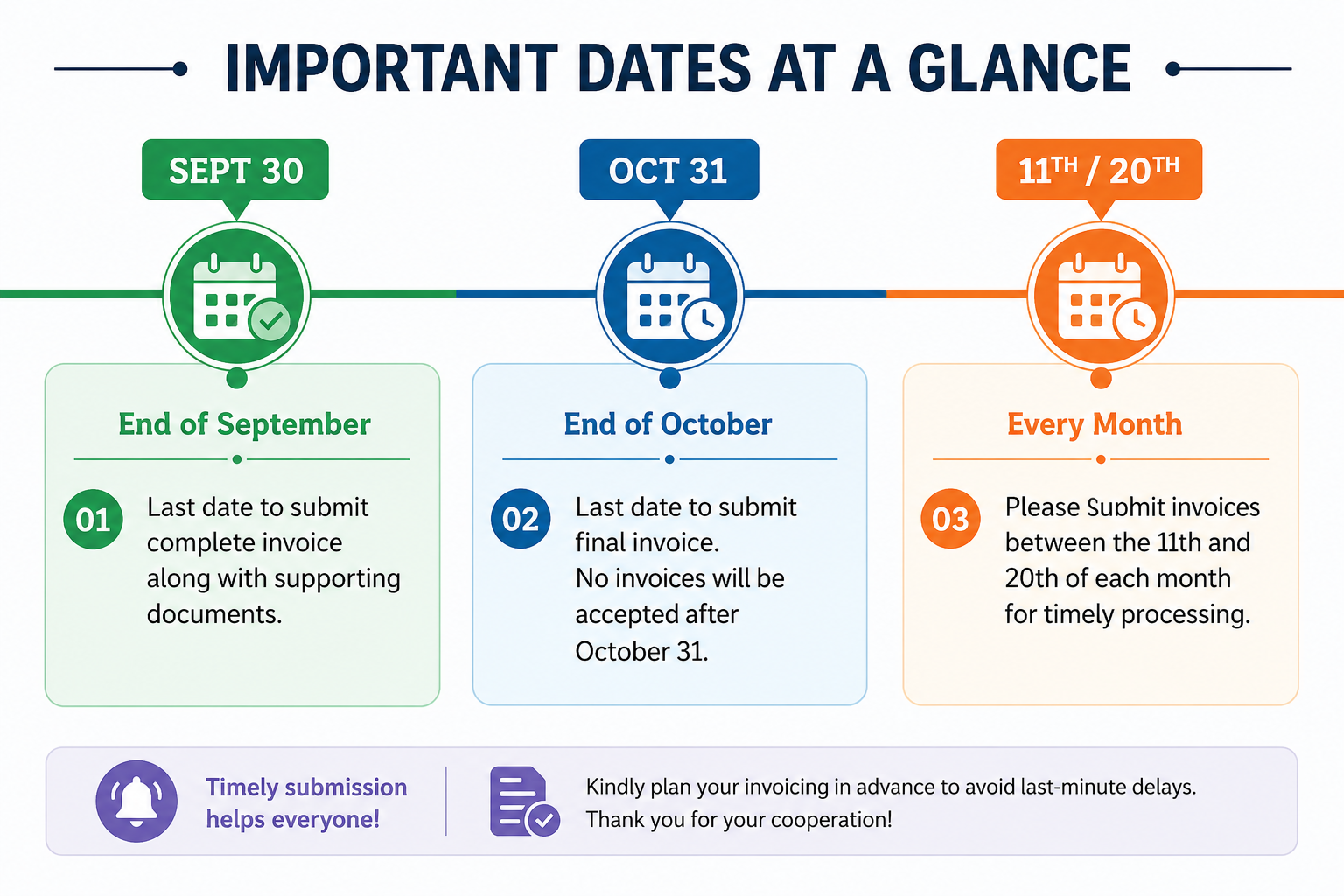
- AY 2026-27: tax audit report by 30th September, ITR-5 by 31st October
Your Combined Compliance Calendar
- Statutory audit — within 6 months of year-end
- Tax audit report (Form 3CD) — 30th September
- ITR-5 filing (audit cases) — 31st October
- GSTR-1 (if registered) — 11th of following month
- GSTR-3B (if registered) — 20th of following month
- TDS deposit — 7th of following month
| Obligation | Deadline | Provision |
|---|---|---|
| Statutory audit completion | Within 6 months of year-end | MCS Act, Sec. 81 |
| Tax audit report (Form 3CD) | 30th September | Income Tax Act, Sec. 44AB |
| ITR-5 filing (audit cases) | 31st October | Income Tax Act, Sec. 139(1) |
| GSTR-1 (if registered) | 11th of following month | CGST Act |
| GSTR-3B (if registered) | 20th of following month | CGST Act |
| TDS deposit | 7th of following month | Sec. 194C / 194J |
We track these for every society we serve, with reminders sent well ahead of each date.
Frequently Asked Questions
1. Is a statutory audit mandatory for housing societies in Mumbai?
Yes, under MCS Act Section 81, audited annually by a CA or panel auditor.
2. Does a society need to file ITR even with no taxable income?
Yes. Societies file as an AOP on ITR-5; interest income is taxable, and the Section 80P deduction requires on-time filing.
3. Does my society need GST registration, and at what threshold?
Registration is mandatory above ₹20 lakh in annual receipts. Separately, 18% GST applies once a member's maintenance crosses ₹7,500/month — two different thresholds.
4. Is GST charged only on the amount above ₹7,500?
No. Once maintenance crosses ₹7,500/month, GST applies to the entire amount, not just the portion above the threshold.
5. What is Section 80P?
A deduction on interest earned from cooperative bank deposits, available only if the ITR is filed by the due date.